
What I Wish Someone Had Told Me Before I Sold My First Business
I built a technology company from nothing, ran it for a decade, and sold it. By most measures, that's a success story. And it is. But if you asked me what I'd change if I could do it again, I wouldn't say the product, or the pricing, or even the timing of the sale. I'd say I wish I'd had a room of people who'd already done it, telling me what they knew, while I was still in the middle of it.
That's not false modesty. It's the honest accounting of what building a business actually costs you, and most of that cost is invisible until you're a few years past it.
Before the technology company, I spent 25 years as a U.S. Diplomat and Senior Commercial Officer with the U.S. Department of Commerce, helping American companies enter new markets in six countries. I sat across the table from business owners who'd never worked with the U.S. government, in cultures where the way you built trust looked nothing like it did back home. My job was to read the room fast, find the real question underneath the polite one, and help people make a good decision with incomplete information. I got good at that. What I didn't have, when I later became the business owner asking for advice instead of giving it, was anyone doing that same work for me.
So I made the decisions the way most owners do: alone, on instinct, with whatever information I could gather on my own. Some of those decisions were right. Some cost me time, money, or both, in ways I only understood clearly after the fact: a hire I made too fast because I was tired of doing the job myself, a price I held too low for too long because I was afraid of losing the account, a hard conversation about the business's direction that I put off for a year longer than I should have. Looking back, almost none of those were things nobody could have known. They were things somebody knew. I just didn't have that somebody in the room.
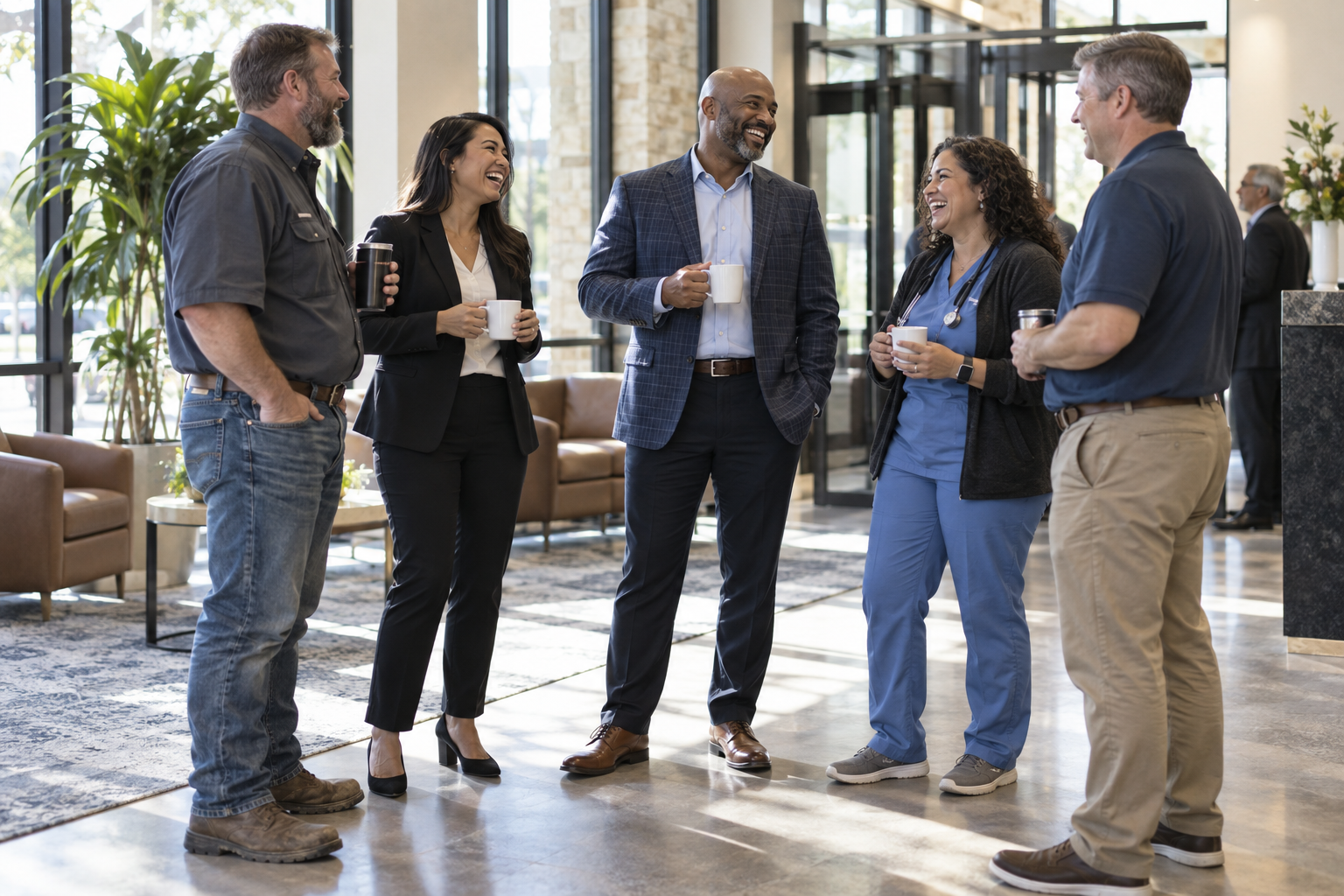
That gap is the reason TAB North Texas exists. Not as an abstract mission statement, but as the literal thing I built because I needed it and didn't have it. Large corporations have boards of directors precisely because no single executive, however sharp, sees the whole picture alone. Most small and mid-sized businesses never get that same advantage. I wanted to build the version that North Texas business owners could actually use: a board of eight to ten owners, from industries that don't compete with each other, meeting monthly, working one real issue, challenge, or opportunity at a time, backed by one-on-one coaching in between meetings.
I'll tell you something else I didn't expect. My board is a genuine cross-section of North Texas: different industries, different backgrounds, men and women, people who wouldn't have crossed paths with me any other way. That surprised me at first. Now I think it's one of the best things about how this works. The people who can see your blind spot most clearly are rarely the people who look, sound, or run their business like you do.
If you're building something right now and you're doing it the way I did, alone, on instinct, hoping you're seeing the whole board, I'd rather you learn from what I've already been through than repeat it. That's not a sales pitch. It's the actual reason I do this work.
Take the free Business Snapshot to get an honest look at where you stand today, or just book a conversation with me. No pitch, just a conversation, from someone who's sat exactly where you're sitting.